Donkey’s milk in history
Donkey milk has attracted considerable interest in recent years for a variety of uses. History seems to point to a millennia-old tradition of using donkey milk in different applications. In ancient times, it was used to cure all kinds of ailments and as a “fountain of youth” for the skin. It was also used as a suitable food for orphaned babies in the 19th and 20th centuries, who drank directly from the donkey’s udder.
Pauline, Napoleon’s sister, took donkey milk baths. Cleopatra, Queen of Egypt, maintained her great beauty and youthful skin with donkey milk baths. She owned a herd of around 700 female donkeys.
The Romans already used donkey's milk for its therapeutic properties. Poppaea, wife of Emperor Nero, used it to keep her skin radiant and supple. Messalina, Roman empress and wife of Emperor Claudius I (10 BC–54 AD), made beauty masks by soaking slices of bread in donkey's milk.
Cleopatra, queen of Egypt, maintained her great beauty and youthful skin with donkey's milk baths. She owned a herd of around 700 donkeys.
Francis I, King of France, exhausted by wars and excesses, followed the advice of a doctor from Constantinople and adopted a donkey's milk treatment, which is said to have worked miracles. He later said: "One day, a donkey's milk restored my health. And for that, I owe more to donkeys than to the Faculty of Medicine."
Pauline, Napoleon's sister, took donkey's milk baths, which caused a scandal at a time when milk was very rare.
In the 19th century, in the streets of major cities, donkeys wandered along, led by merchants announcing their arrival by shouting: "Donkey's milk, good donkey's milk!" Elegant ladies regularly drank this precious beverage, but poor families only bought it for a sick child or a frail elderly person. At the same time, donkey's milk began to be used in maternity wards. Donkeys readily nursed infants who were brought directly to their udders.
Donkey's milk was sold until the beginning of this century to feed orphaned babies and care for frail children, the sick and the elderly. In keeping with this tradition of using donkey's milk, donkey farms sprang up in France, Italy, Switzerland, Germany... The success of these specialist farms, which sell donkey's milk, confirms the product's age-old reputation and the vital importance of its properties.
Donkey's milk was sold until the beginning of this century to feed orphaned babies and care for frail children, the sick and the elderly. In keeping with this tradition of using donkey's milk, donkey farms sprang up in France, Italy, Switzerland, Germany... The success of these specialist farms, which sell donkey's milk, confirms the product's age-old reputation and the vital importance of its properties.
Cleopatra’s beauty secret
Donkey milk has been known and used since ancient times
by the Greeks and Romans. It was a luxury drink, but was also prescribed by Hippocrates for all kinds of ailments (healing, joint pain, etc.). Far from being limited to medicinal or culinary use, it was Cleopatra’s beauty secret. She took daily baths in donkey milk to preserve her radiant complexion and:
the softness and youthfulness of her skin.
Legend has it that filling a bath
required the milk of 300 donkeys!


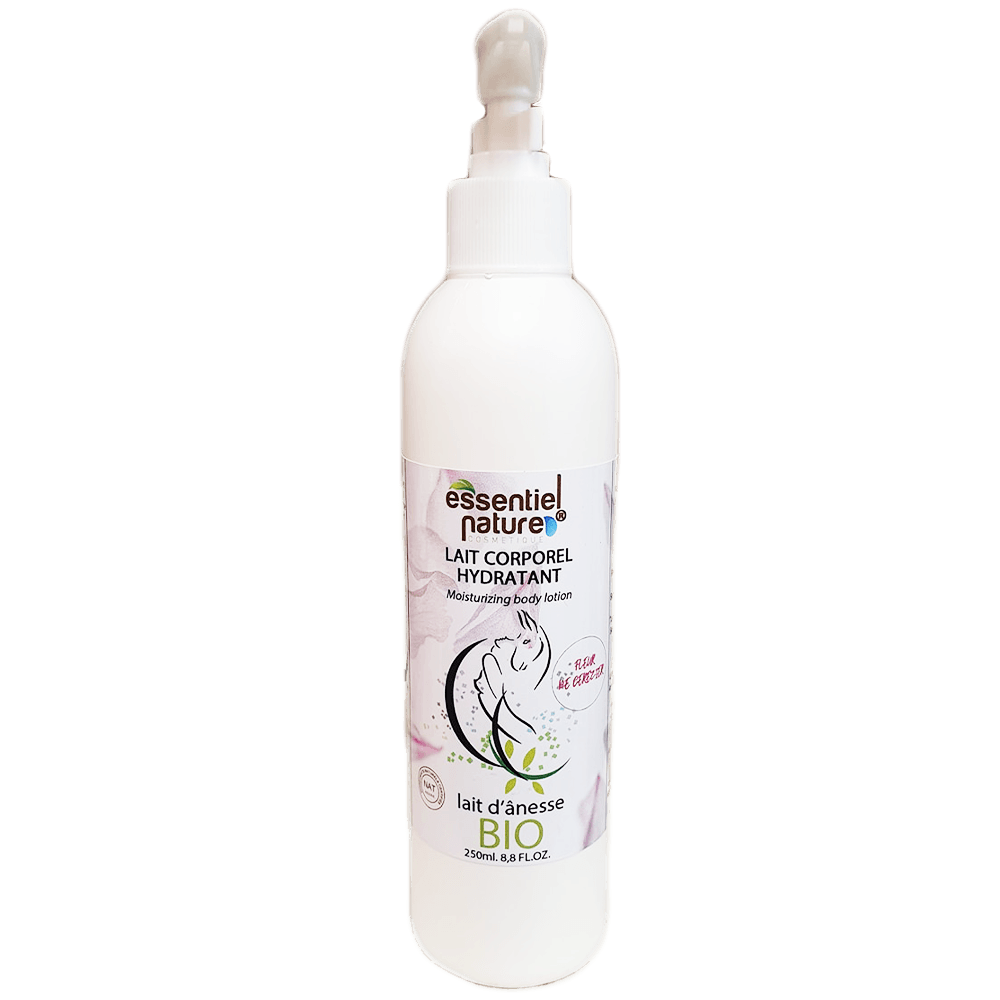

Certified organic donkey milk
Origin: Italy
Our donkey milk is ICEA-certified, which guarantees its quality and, just as importantly to us, animal welfare.